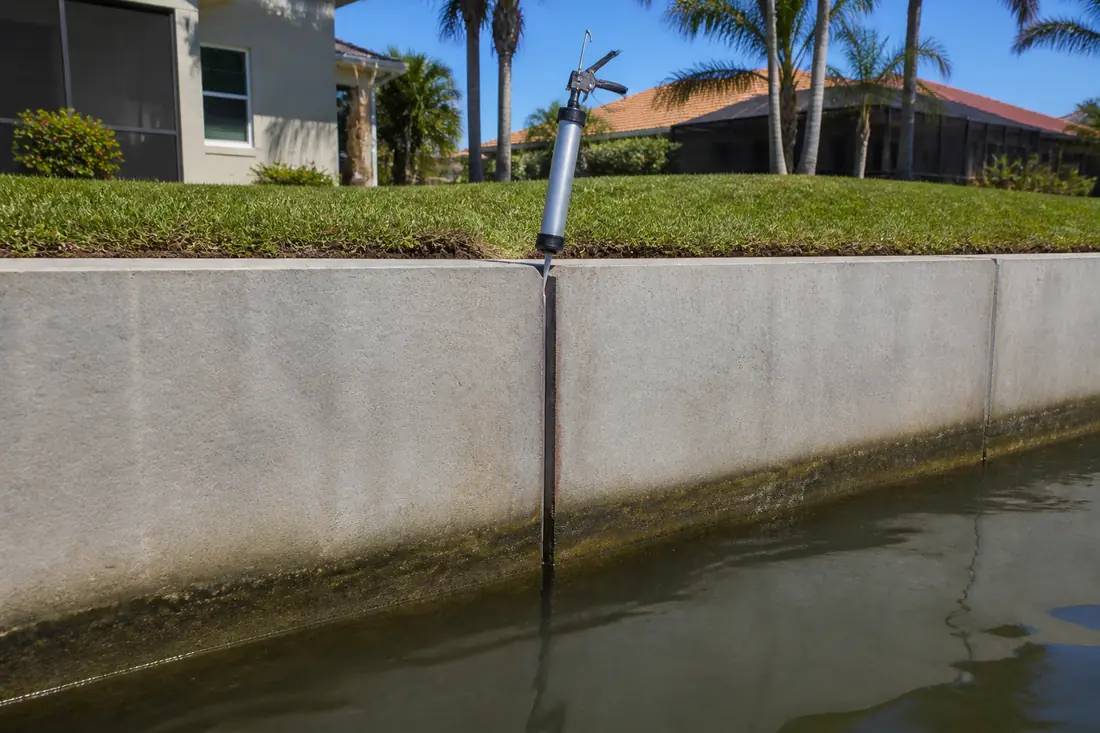
Seawall Repair
Joint, cap and panel repairs on walls that are losing soil but have not moved structurally.
Free estimateDetails
Seawall repair, replacement and dock work across Charlotte County.
Seawall repair, replacement and dock work across Charlotte County.
Mon–Fri 7:30am – 5:00pm · Sat 8:00am – 12:00pm · Sun Closed
Straight through to a person, not a phone tree.
Tell us what is going on and we will get back to you with the next step.
The yard tells you before the wall does
Soil leaves through a failed joint long before the structure moves. Depressions in the lawn and paving that has begun to tilt are the early, cheap signal — and they are the reason an inspection is worth more than a photograph.
Repair and replacement priced separately
A wall with joint separation and a wall that has rotated at the toe are different projects. Both get quoted where both genuinely apply, rather than defaulting to the larger one.
What is behind the wall gets assessed
Tiebacks and anchors sit buried in the yard and cannot be seen. They are diagnosed from how the wall behaves, which means the assessment covers more than the face you can photograph.
Seawall repair, replacement and dock work across Charlotte County.
Most seawall failures announce themselves long before anything dramatic happens, and they announce themselves in the yard rather than on the wall. Soil escapes through an open joint or a cracked cap, and the ground behind settles. A depression in the lawn, a paver that has started to tilt, a pool deck with a hairline that was not there last year.
At that stage the structure is usually sound and the work is comparatively small: sealing the route the soil is taking, restoring what has been lost behind the wall, and correcting whatever caused the joint to open. The same wall two or three seasons later, after several storm cycles of continued loss, is frequently a replacement.
That gap between the two outcomes is why the timing of a repair matters more here than the technique. Nothing about a seawall gets cheaper by waiting.
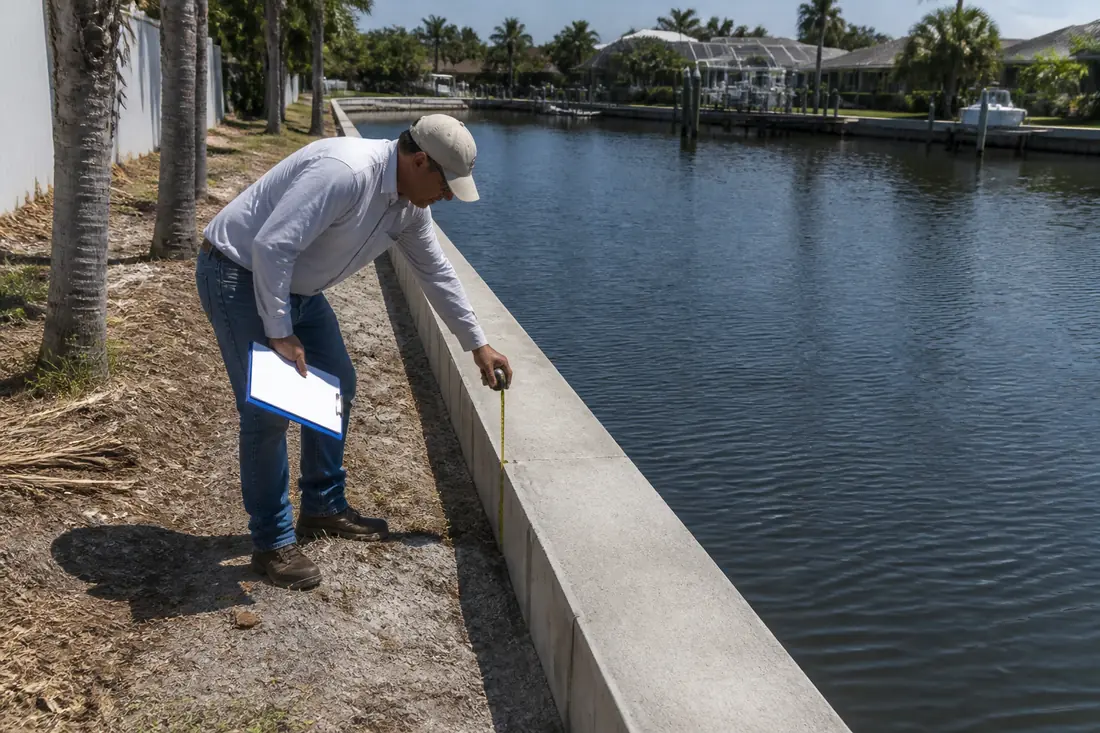
A seawall is largely invisible. The face is a few feet of concrete; the parts that hold it up — the tiebacks running back into the yard, the anchors they end at, the toe below the waterline — cannot be seen at all. Which means condition is inferred from behavior rather than observed directly.
That is what an inspection is for. Sighting the wall along its length for rotation or bowing, checking joints and cap for openings, looking at what the weep holes are discharging, and reading the ground behind for settlement that indicates soil has already been leaving.
On a purchase it is the single most useful thing to commission, because the wall transfers with the property and a general home inspection rarely covers it in any depth.
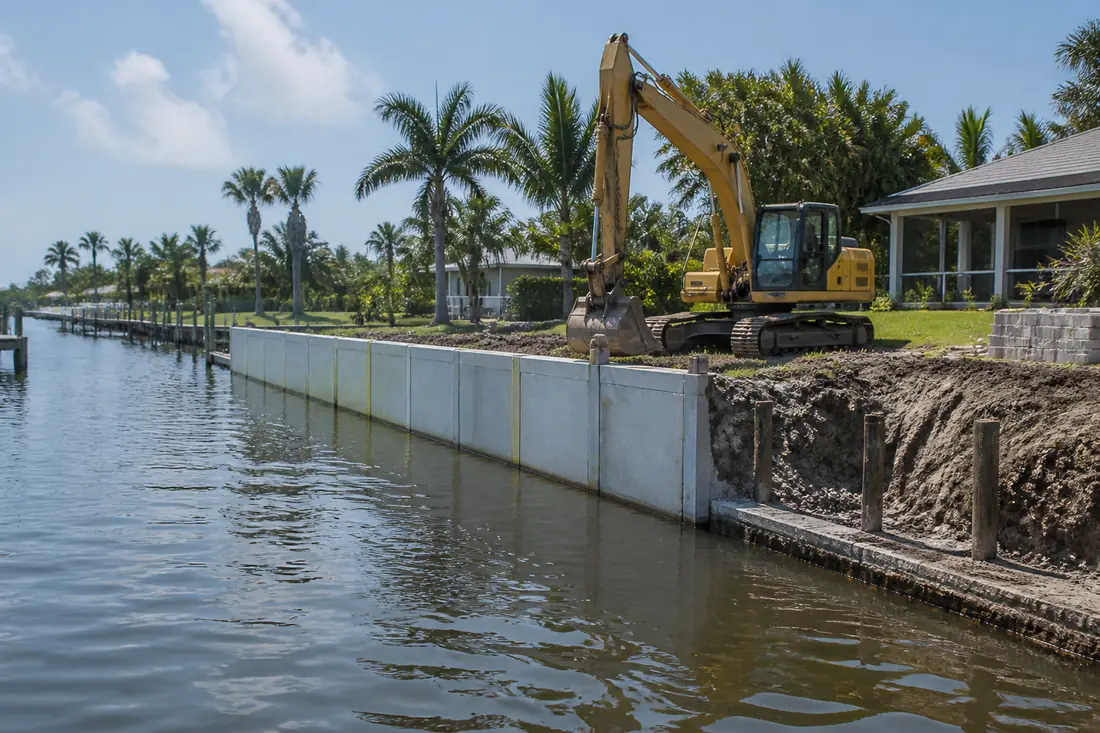
Replacement becomes the answer when the structure itself has failed rather than its joints. A wall that has rotated outward at the cap, bowed along a run, or dropped where the toe has been undermined is no longer doing the job, and sealing it does not restore the capacity that has been lost.
It is also the point at which the design can be corrected. Many older canal walls were built without the drainage or the anchoring that would be specified now, and a replacement is the opportunity to address why the first one failed rather than reproducing it.
Replacement is permitted work. Requirements are set by the authority with jurisdiction over the property and are worth establishing before the design is fixed rather than afterwards.
When soil leaves through a seawall it does not leave evenly. It leaves from immediately behind the failure, creating a cavity that is invisible from the surface until the ground above it settles into it.
Filling those voids does two things: it removes the settlement risk to whatever sits above them, and it restores support behind the wall. Doing it without closing the route the soil was taking, though, simply supplies more material to be washed out, which is why void filling and joint repair belong to the same job.
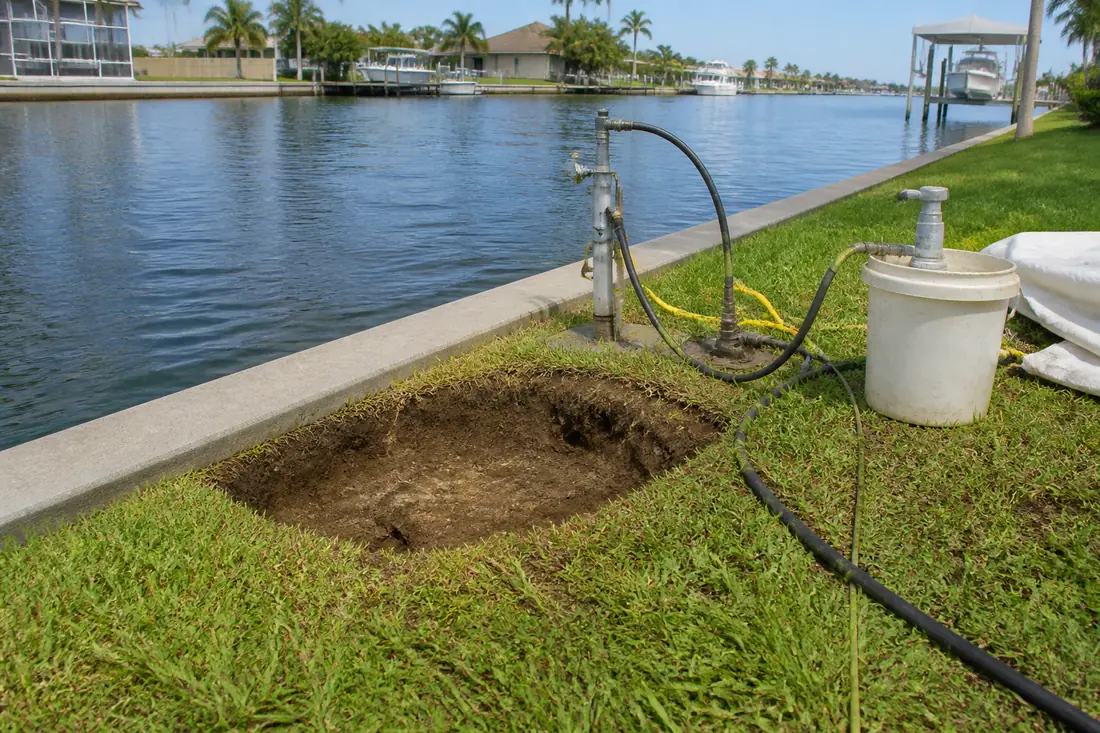
Joint, cap and panel repairs on walls that are losing soil but have not moved structurally.
Joint, cap and panel repairs on walls that are losing soil but have not moved structurally.
Condition assessment before buying, before storm season, or when something in the yard has started moving.
Full replacement where the existing wall has moved, rotated or reached the end of its service life.
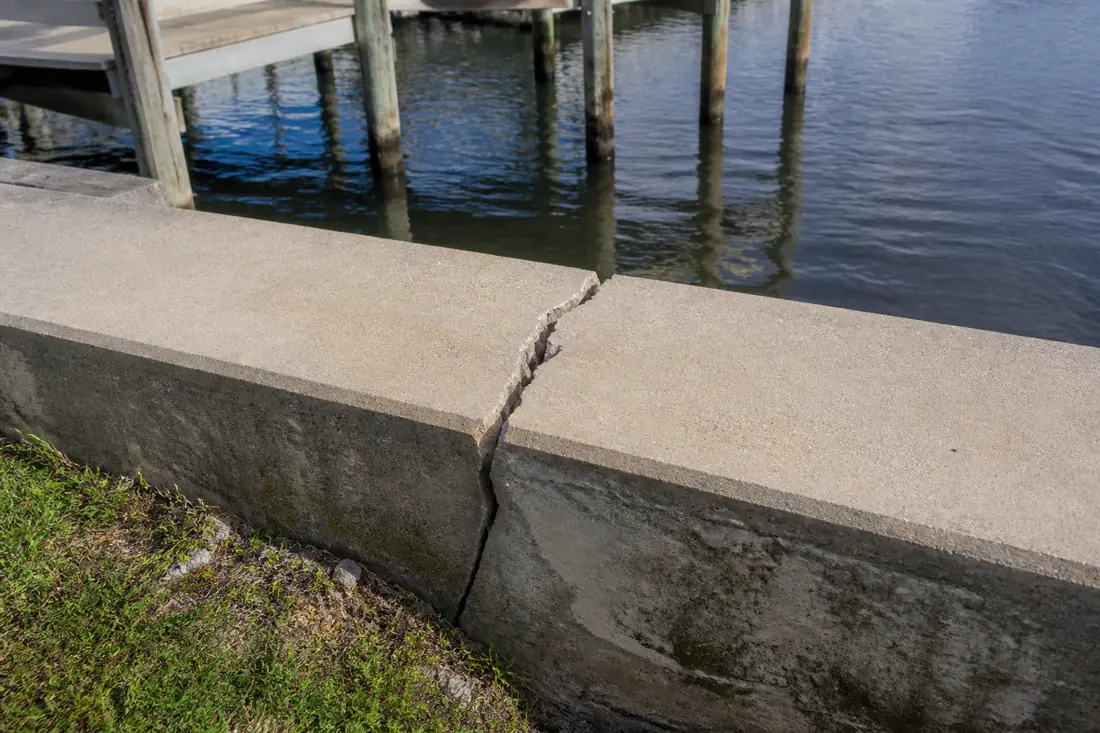
Repair and replacement of the concrete cap that ties the top of the wall together.
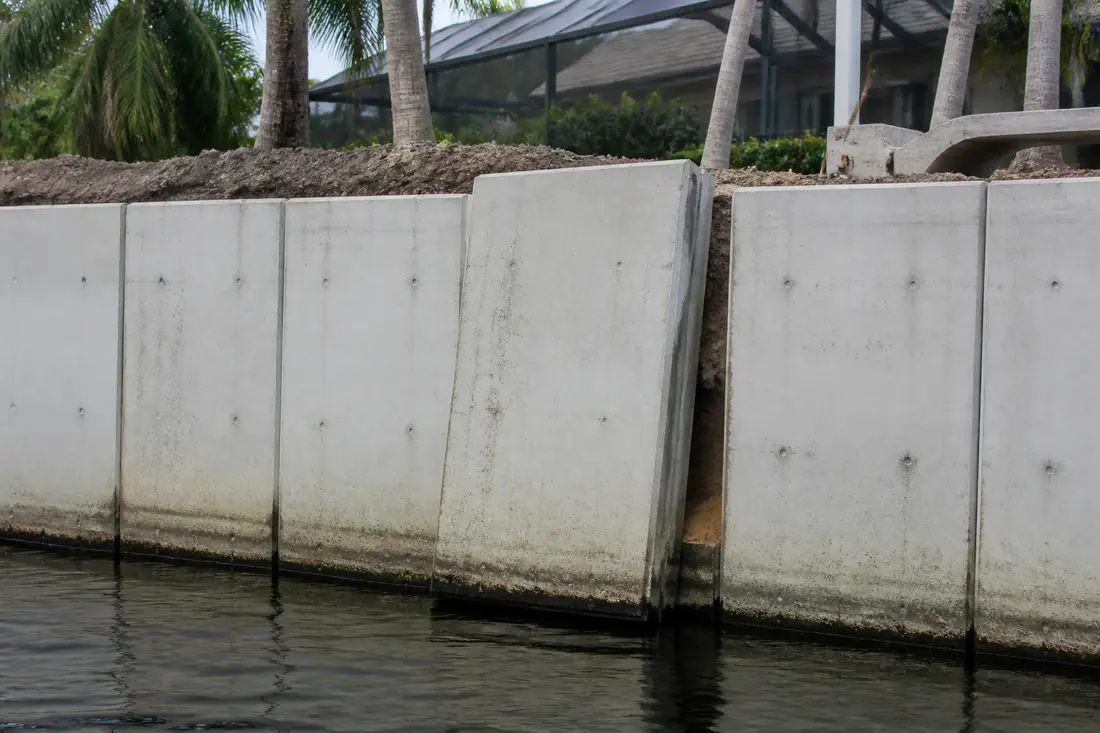
Replacing individual failed panels where the rest of the wall remains sound.
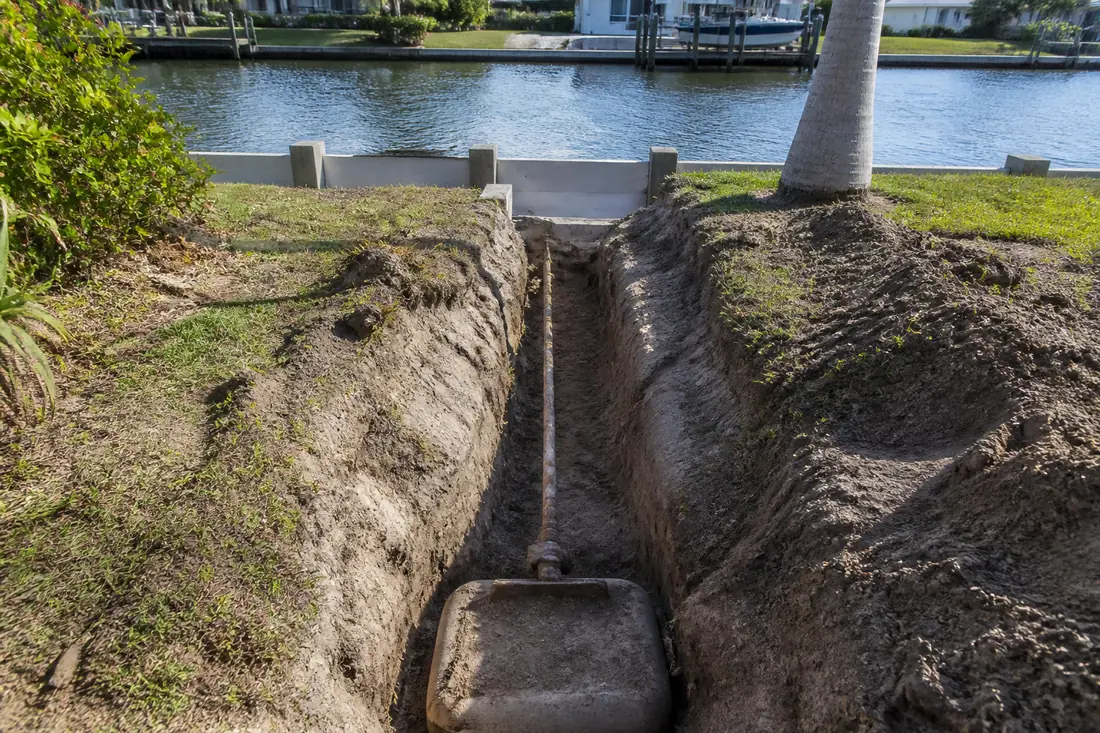
Restoring the buried anchoring that holds the top of the wall against the soil behind it.
Filling the cavities left behind a wall after soil has escaped through it.
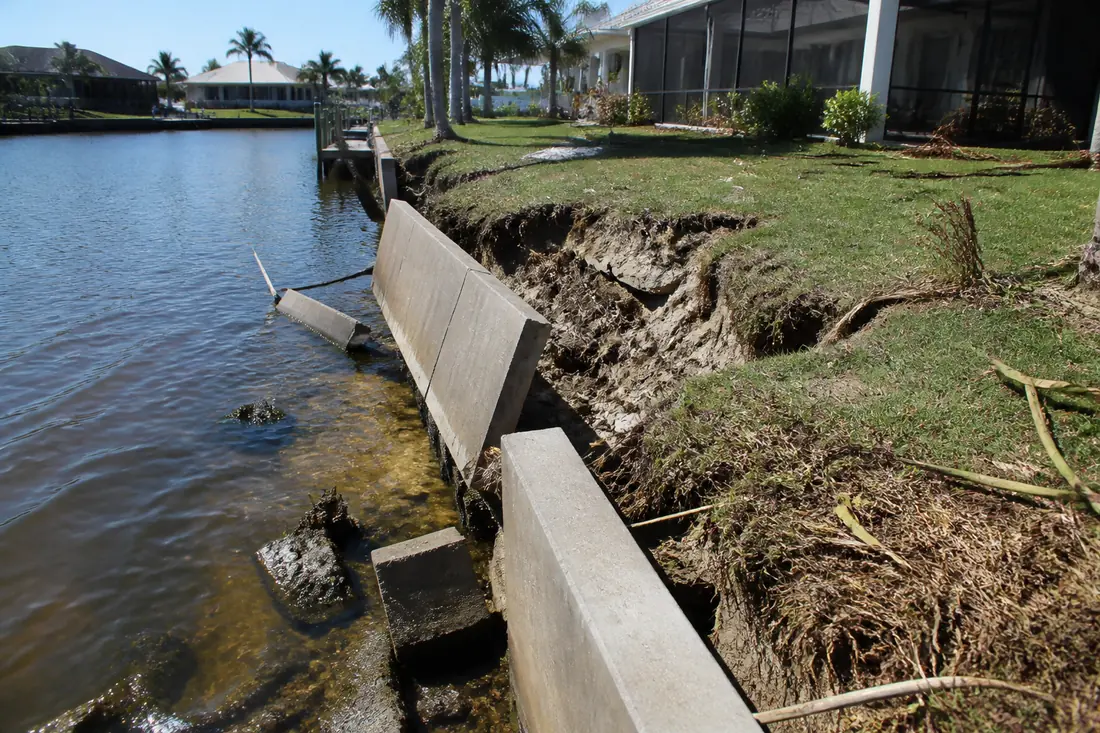
Assessment and repair after surge, and documentation for an insurance claim.
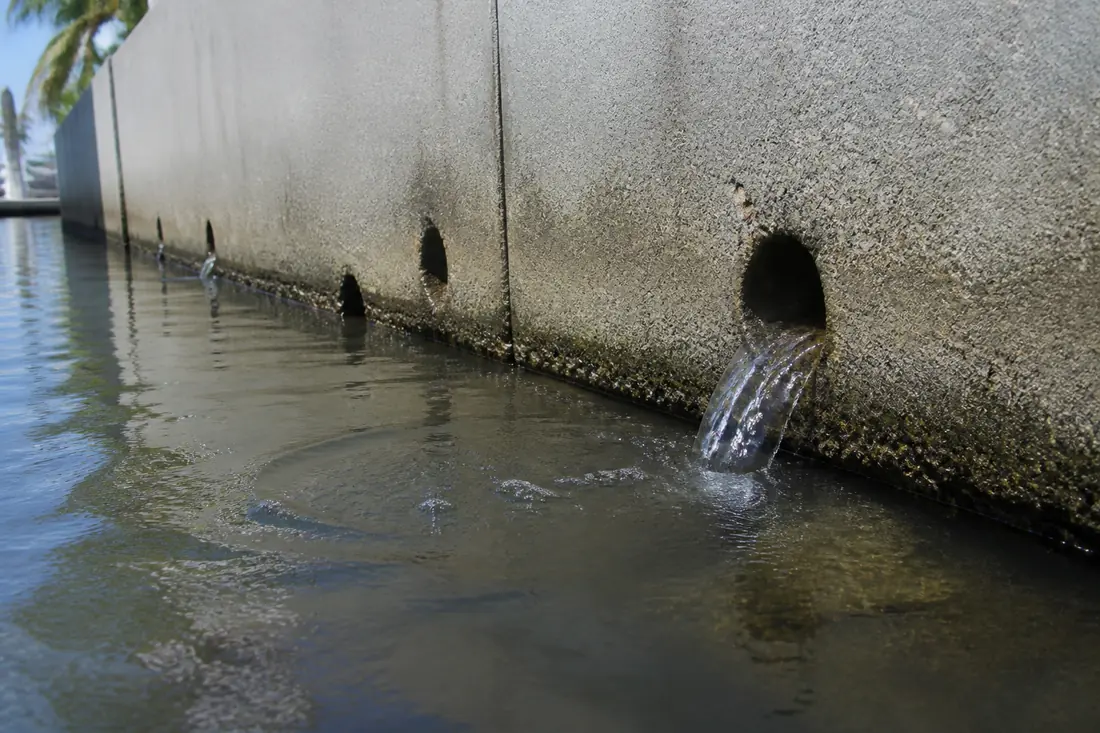
Restoring the drainage that stops water pressure building behind the wall.
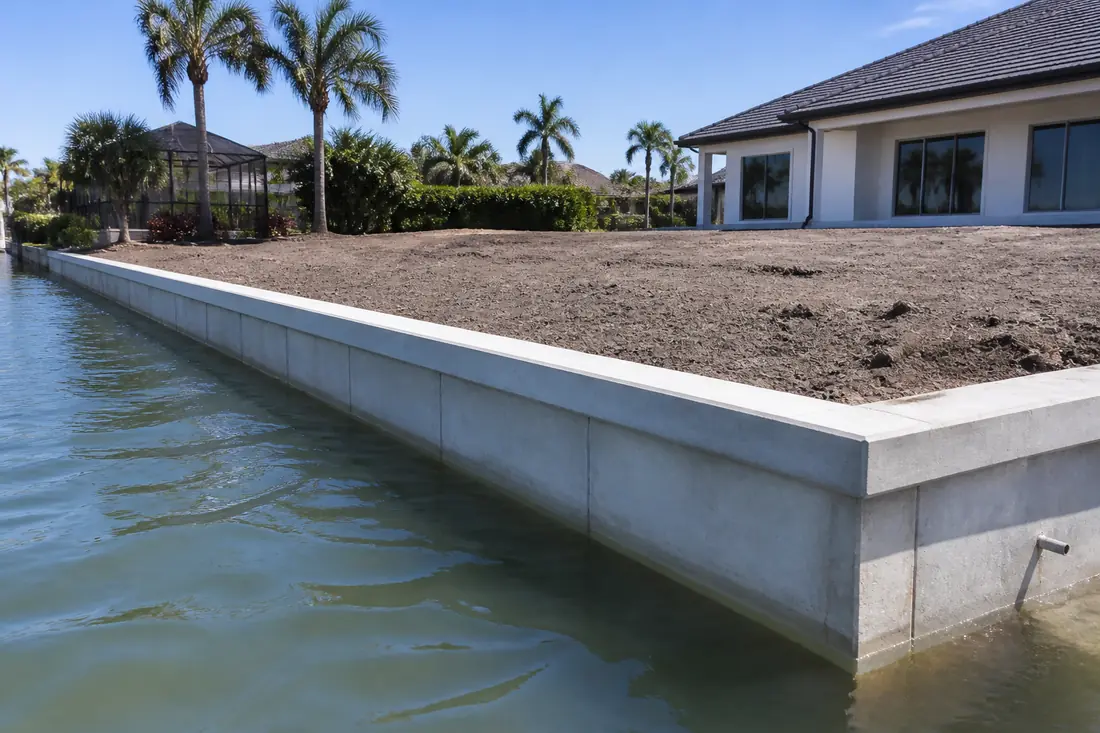
Building a wall where none exists, on a property that needs one.
Stone protection at the toe of a wall or along a natural shoreline.
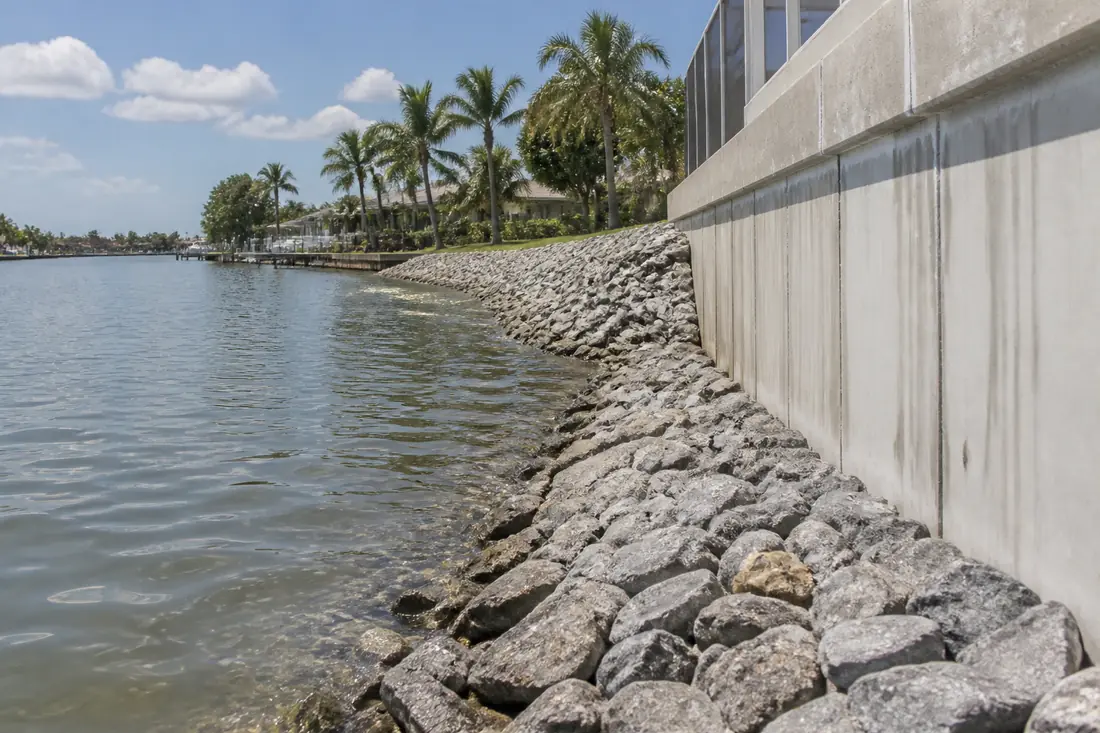
Stone protection at the toe of a wall or along a natural shoreline.
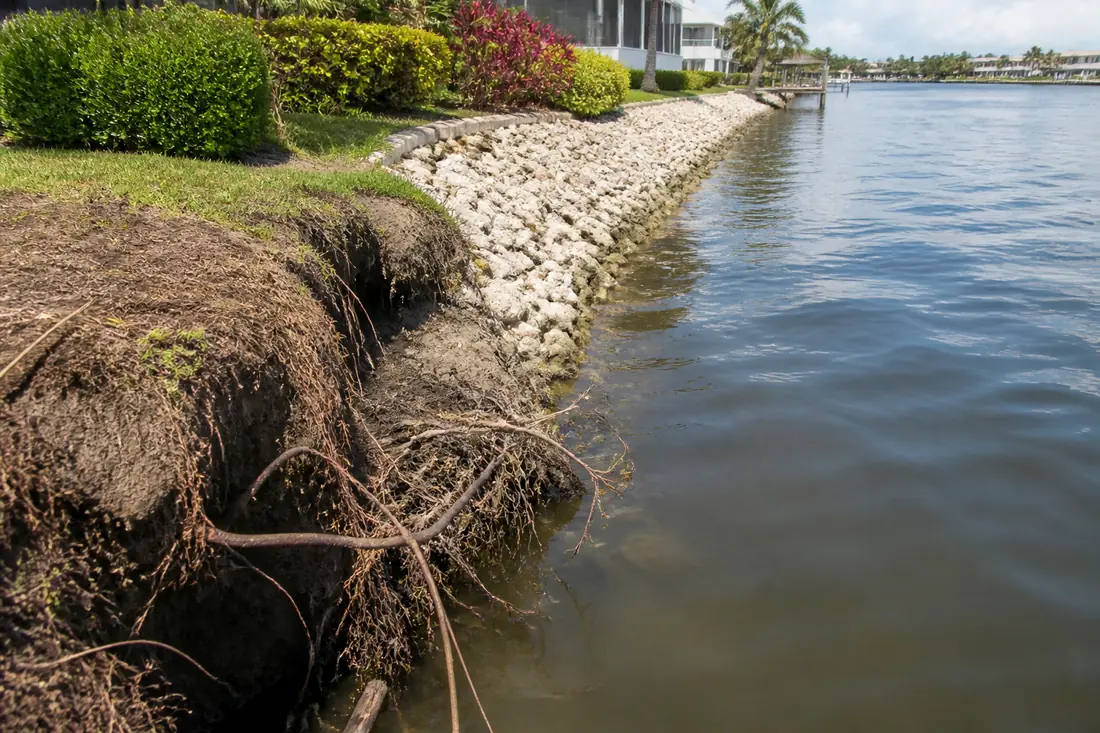
Stabilizing banks that are retreating, with or without a structural wall.
New docks on canal and open-water frontage, sized for the boat and the site.
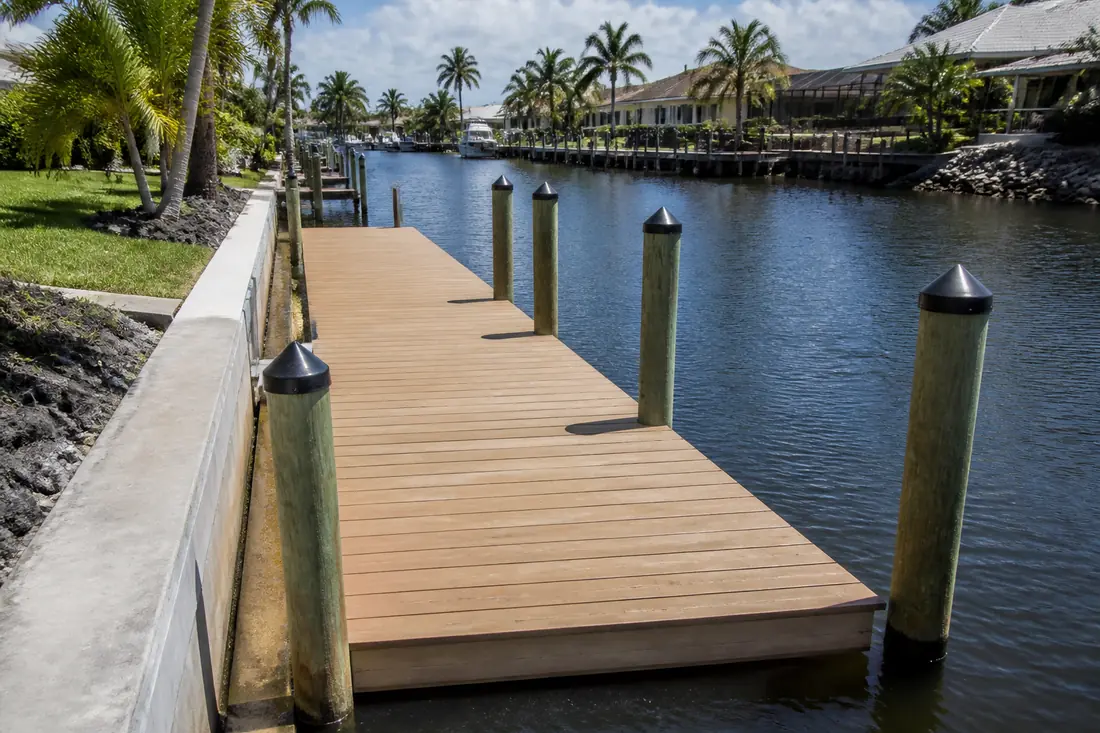
New docks on canal and open-water frontage, sized for the boat and the site.
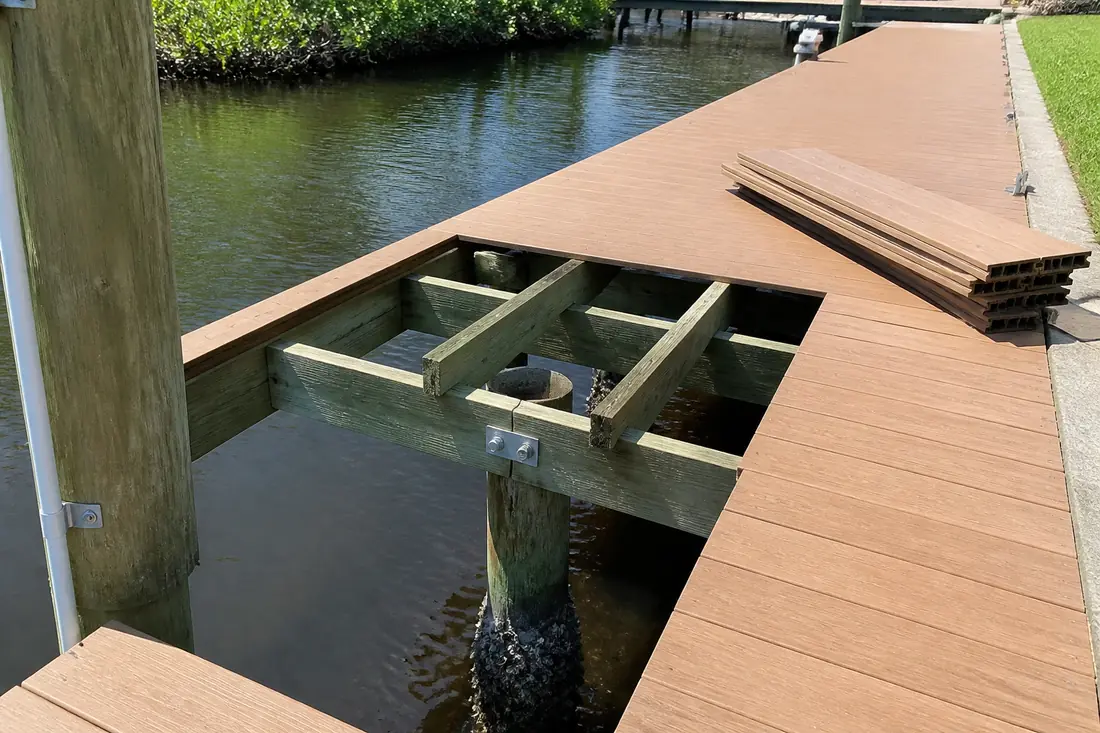
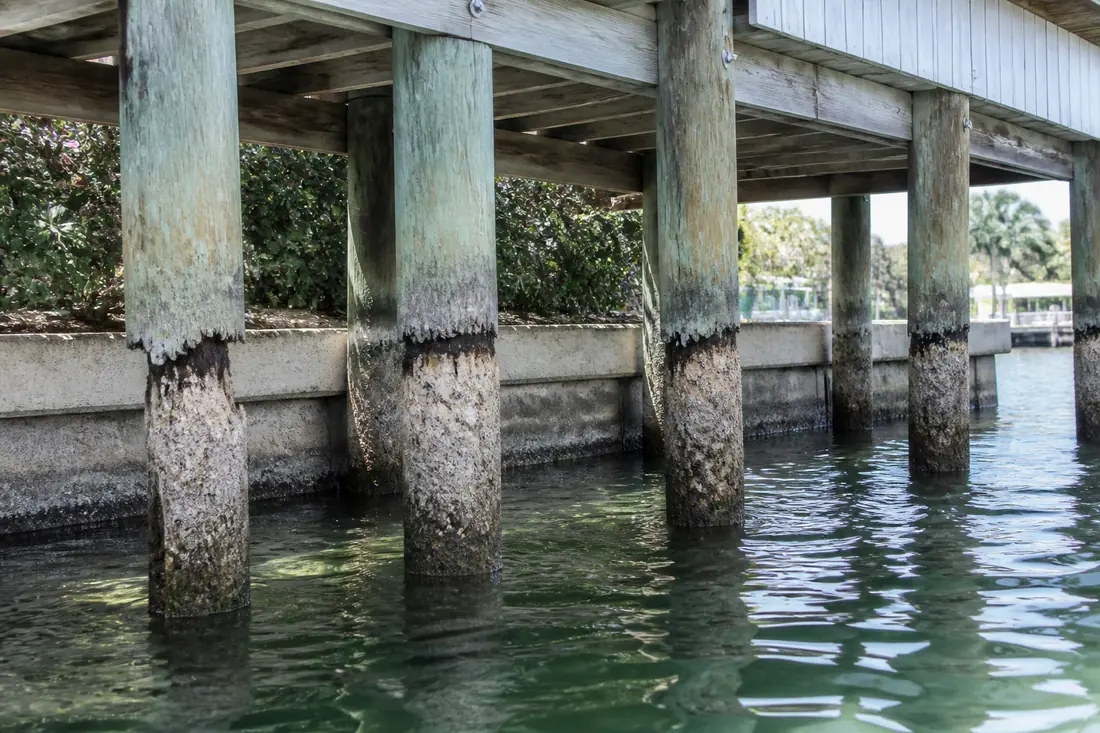
Restoring or replacing the pilings a dock or lift depends on.
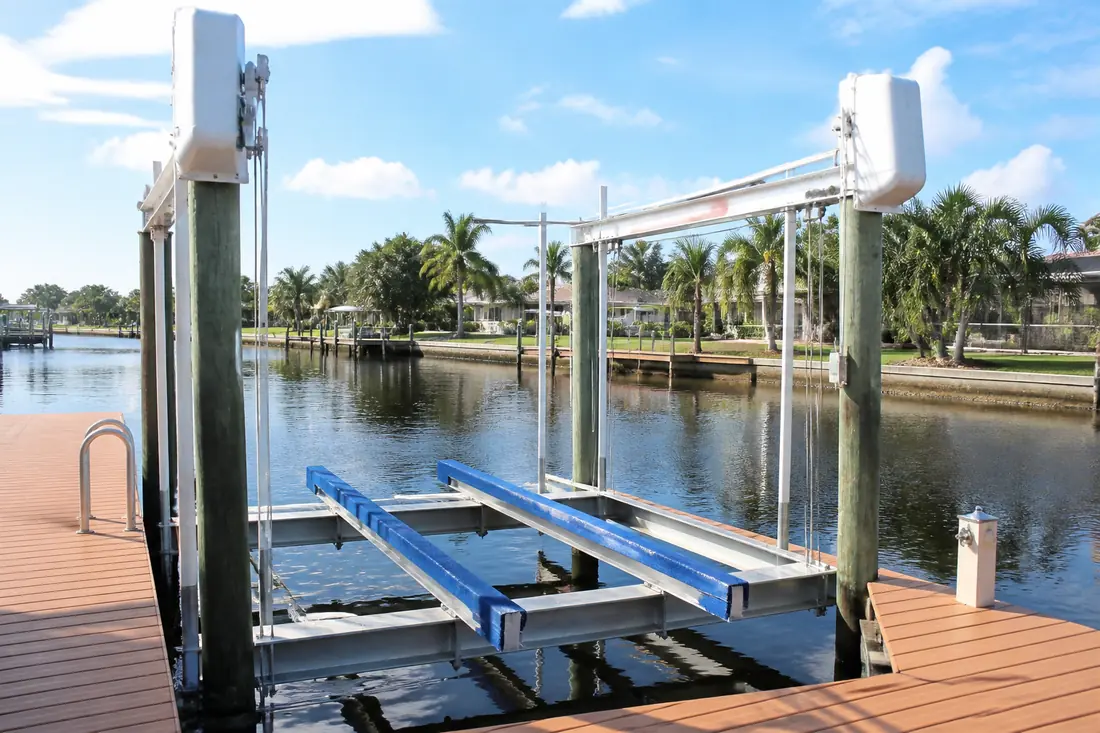
Lifts sized for the boat and the water depth actually available.
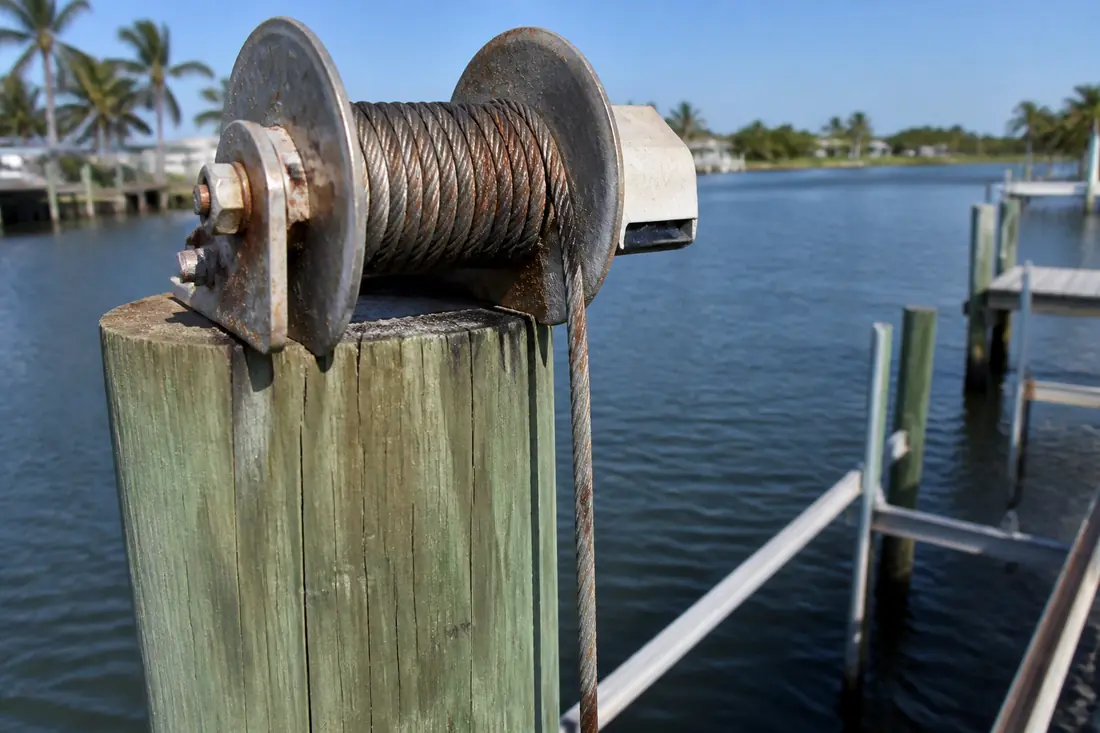
Cables, motors, winches and cradles on lifts that have stopped working properly.
Seawall and dock work for condominium associations, marinas and commercial waterfront.
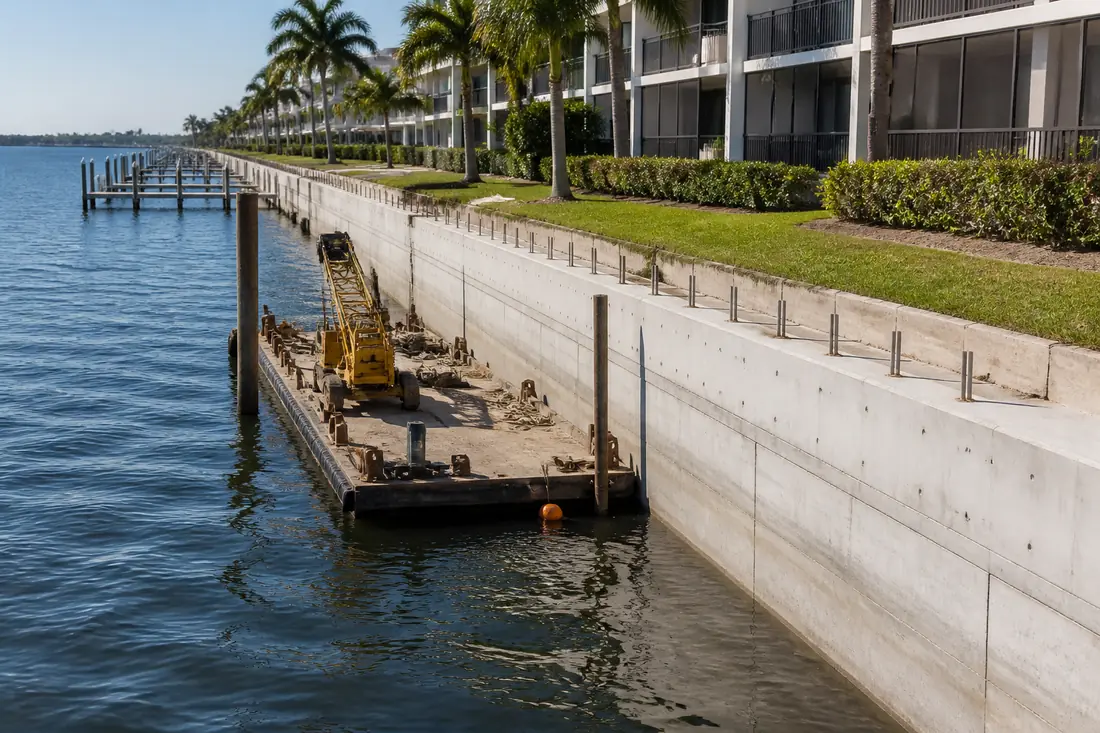
Seawall and dock work for condominium associations, marinas and commercial waterfront.
Every service we offer, and what the work actually looks like.
Your request is read and sorted by urgency rather than dropping into a queue. Marking the job urgent on the form changes how quickly it gets looked at.
Work of this kind is assessed in person rather than quoted from a phone description, so the scope and the price are both settled before anything starts.
You see the options and the cost before any work starts, and a cheaper repair that genuinely solves the problem should be presented alongside the bigger one.
Removed material is hauled away and the site left clean. Cleanup belongs in the job rather than being an extra you have to ask for.
A blow count is not a load rating. Florida caps what a driving formula can claim at 40 tons, sets out when a load test is required, and makes the proof documentary rather than observed.
Read the guide →Florida has one building code section titled Seawalls and Bulkheads. It is reserved, and it only ever applied to two counties. So what sets the numbers on a Charlotte County wall?
Read the guide →A seawall is one of two structures wearing the same face. The Corps sheet pile manual names the failure modes, and one of them cannot be fixed by driving deeper.
Read the guide →10 cities and the communities around them. Not sure if you are covered? Call and ask — we will tell you straight.
Section 15 · Gulf Cove · Harbour Heights
33948, 33952, 33953, 33954, 33980
Punta Gorda Isles · Burnt Store Isles · Historic District
33950, 33982, 33983
Englewood Beach · Grove City · Manasota Key
34223, 34224
Rotonda Lakes · Long Meadow · Broadmoor
33947
Cape Haze · Rotonda Sands · Placida Harbour
33946
Myakkahatchee · Warm Mineral Springs · Duck Key
34286, 34287, 34288
Charlotte Harbor · Bayshore · Harbour Heights
33980, 33981
El Jobean · Gulf Cove · South Gulf Cove
33981
Burnt Store Marina · Burnt Store Lakes
33955
PGI · Sailboat Section · Powerboat Section
33950
It turns on whether the structure has moved. A wall losing soil through a joint while standing plumb is usually a repair. A wall that has rotated at the cap, bowed along its run, or dropped at one end has moved, and repairs to that tend to buy time rather than resolve it.
Almost always something in the yard rather than on the wall — a depression in the lawn, paving that has begun to tilt, or a weep hole discharging soil instead of water. Soil leaves before the structure moves.
Repair and replacement are treated differently, and which office you are dealing with depends on the address. In unincorporated Charlotte County the County issues the residential seawall permit, and work on saltwater frontage can additionally involve FDEP or the US Army Corps. Inside the City of Punta Gorda's canal districts — Punta Gorda Isles and Burnt Store Isles — the City owns the seawalls and replaces them itself under the canal maintenance assessment, so the private permit question there is usually about the dock, the lift or the upland rather than the wall. Establish which applies before a design is finalized or materials are ordered.
Yes, and separately from the general home inspection. The wall transfers with the property, its condition is not obvious from the dock, and what it will need is rarely reflected in the asking price.
Charlotte County — Port Charlotte, Punta Gorda, Punta Gorda Isles, Englewood, Rotonda West, Placida, Charlotte Harbor, El Jobean and Burnt Store — plus North Port immediately to the north.
Call (941) 336-7742 or request a callback — whichever is easier.