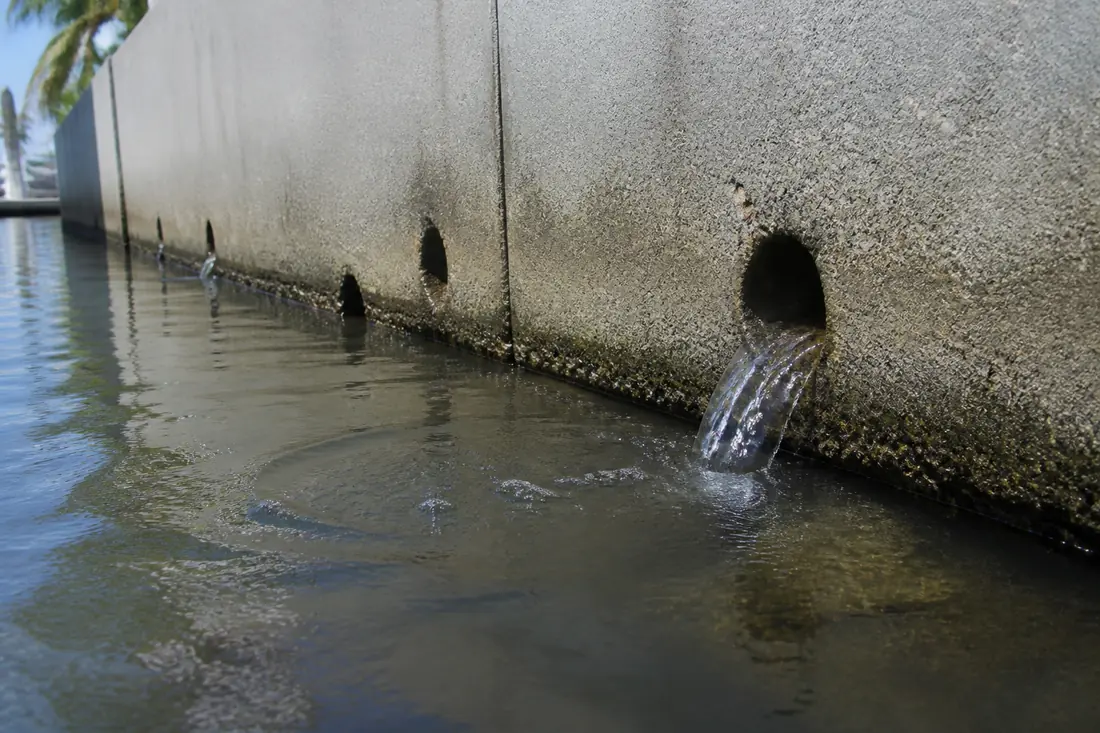
Drainage and Weep Holes in Port Charlotte, FL — What to Expect
Weep holes let water out of the soil behind a seawall. Without them, rainfall and tidal water accumulate and press outward on a structure that was designed for soil load rather than water load, and that pressure is one of the most common reasons a wall moves.
They fail in two ways and the second is worse. Blocked weep holes stop draining, which loads the wall. Weep holes discharging soil rather than water mean the filter behind them has failed and the wall is actively passing the yard into the canal.
What Is Included
- Blocked weep holes cleared and filters restored
- Soil-discharging weeps treated as urgent, not cosmetic
- Drainage added where a wall was built without it
What Matters When Choosing a Seawalls Contractor in Port Charlotte, FL
The yard tells you before the wall does
Soil leaves through a failed joint long before the structure moves. Depressions in the lawn and paving that has begun to tilt are the early, cheap signal — and they are the reason an inspection is worth more than a photograph.
Repair and replacement priced separately
A wall with joint separation and a wall that has rotated at the toe are different projects. Both get quoted where both genuinely apply, rather than defaulting to the larger one.
What is behind the wall gets assessed
Tiebacks and anchors sit buried in the yard and cannot be seen. They are diagnosed from how the wall behaves, which means the assessment covers more than the face you can photograph.
Drainage and Weep Holes FAQs
My weep holes are running muddy water. Is that a problem?
Yes, and it is worth acting on. Clear water means the drainage is working. Soil coming out means the filter behind the wall has failed and material from your yard is being carried into the canal, which creates voids behind the structure.